


If you're picking an estate agent right now, Yopa's fee can look very tempting. Around £999, when a typical high-street agent might charge £3,000 to £4,000.
I've paid over half a million pounds in estate agent fees over the last 15 years, so nobody wanted cheap online agents to work more than I did. But after everything I've seen, I wouldn't use them. Here's my honest answer.
Yopa's low fixed fee comes with serious trade-offs. On their cheapest packages the fee is payable whether or not your home sells, most of the selling work falls on you, and independent reviews are far weaker than the advertising suggests. Most sellers get a better result with a good no-sale-no-fee local estate agent.
But there's more to it than that...
If you want to cut right to the chase and find the best way to sell your home, given your property and priorities, I've designed a short quiz to help. It's free, and you'll get your results in about 60 seconds.
Hit the button below to get started:
Still with me? Then let me start with a call I had recently, because it tees up exactly why I decided to write this guide.
The £2,500 phone call that sums Yopa up
I spoke with a chap in his retirement. He'd lived in his flat for 35 years, recently married, and the two of them wanted a fresh start somewhere new.
Yopa came round, gave him a valuation, and took £2,500 as their upfront fee. He's a pensioner and, as he put it, that's real money to him.
Six weeks on, he'd had two viewings. That's it. And Yopa, who set the price in the first place, were on the phone telling him to cut it by £20,000.
So he did. Since then? Not one viewing.
The excuse Yopa gave him: "the market's tough, wait for mortgage rates to change". A pretty shoddy excuse after taking £2,500 off someone...
And this isn't the first time I've heard it...
A few months ago I spoke with another retiree. She'd been paying Yopa £75 a month for nearly two years on a payment plan. Why? Because she'd signed up with them, went with the price they recommended, and got no viewings in six months.
When she left, they still insisted on taking their fee... hence the payment plan. Crazy.
Both stories follow the same pattern:
- A confident valuation to win the sign-up.
- The fee locked in up front.
- Very little activity afterwards.
- A push for a big price cut, or no sale at all, with the fee kept either way.
Before you think I'm biased, one thing worth knowing...
I run this website, and we're an online property advice platform... Yopa would pay me to say they're great and send them customers. Affiliate directories list payouts of around £100 per sign-up. A lot of websites take that money. I'd rather let them keep it and tell you the truth instead. Hence this article.
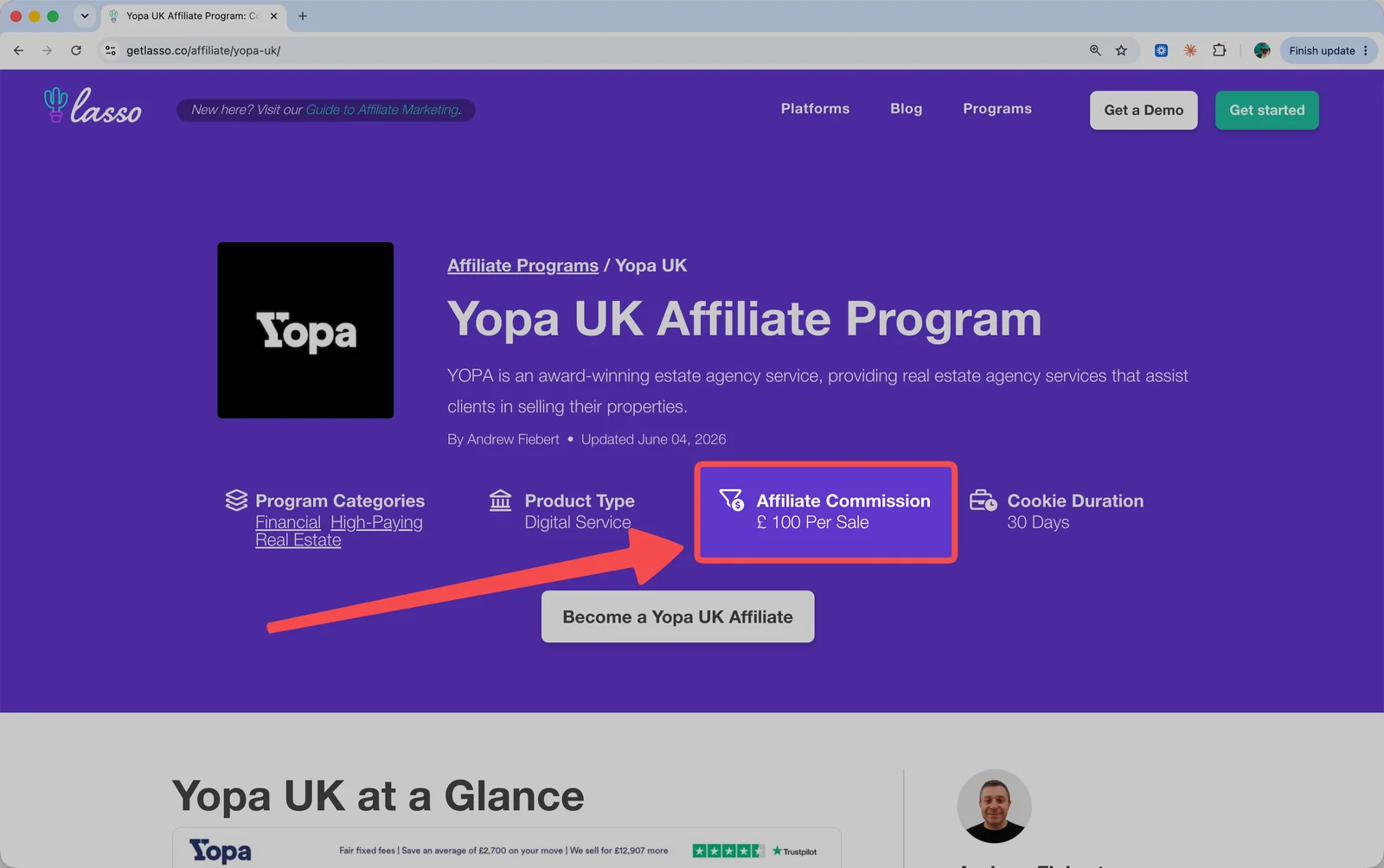
So here are the five reasons I'd never use Yopa to sell my house.
1. Yopa get paid whether your house sells or not
Where did things first go wrong for that chap? It wasn't the marketing, and it wasn't even the price. It was the moment the money changed hands.
The cheap headline deals (the ones Yopa advertise hardest) get them paid up front. Once they've been paid, they have far less reason to actually sell your house. Their incentives stop matching yours.
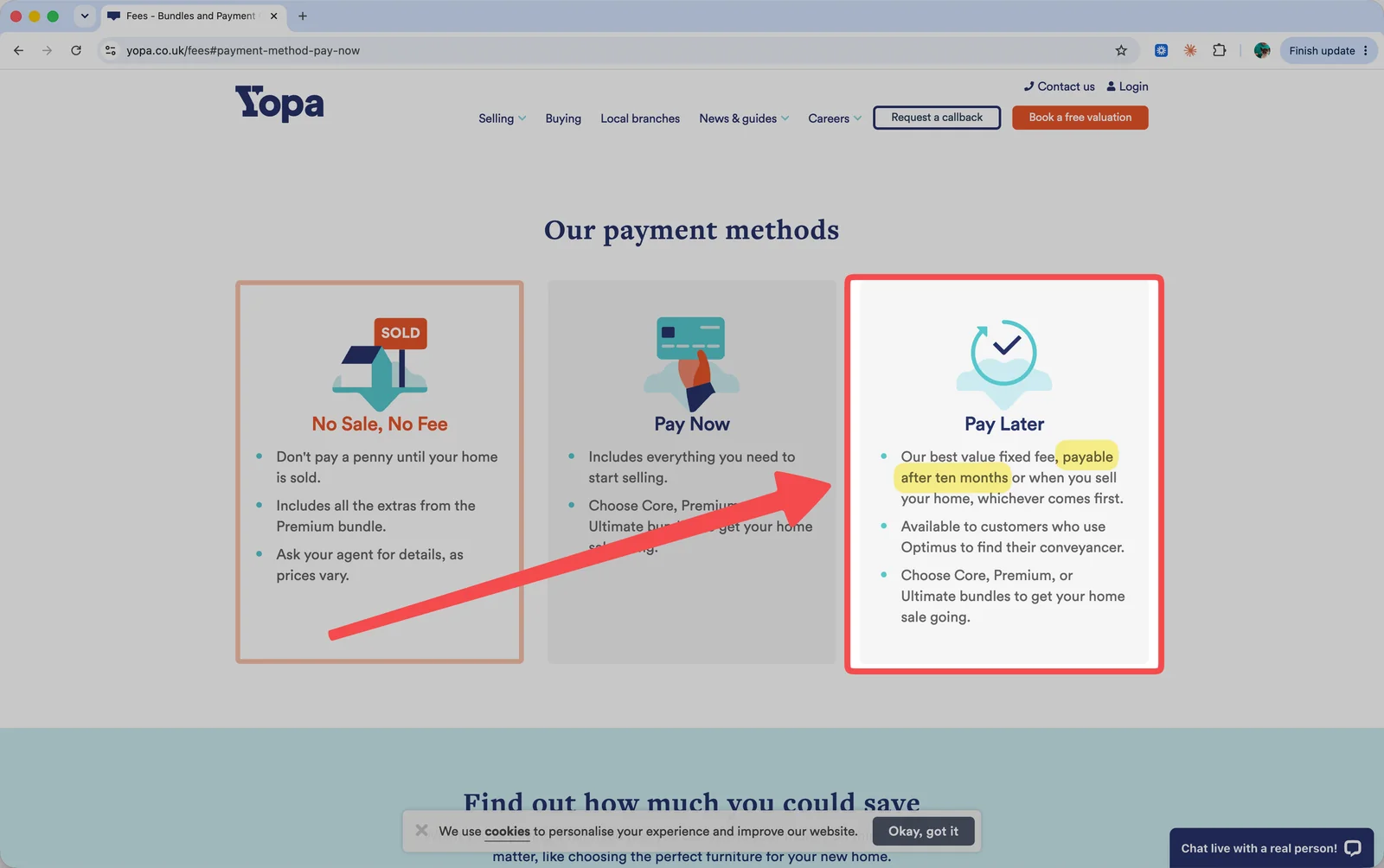
Yopa also offer a "Pay Later" option. You don't lay out cash on day one, but Yopa's own fees page describes it as payable after ten months or when you sell, whichever comes first. In other words, you still pay whether they sell your home or not.
That's exactly how the lady from earlier ended up on a £75-a-month payment plan, nearly two years after they failed to sell her home. And these aren't isolated cases:
- The cancelled listing.
One seller on MoneySavingExpert describes cancelling after Yopa delivered nothing for six months. Yopa then took the full fee from the card on file. - The debt collectors.
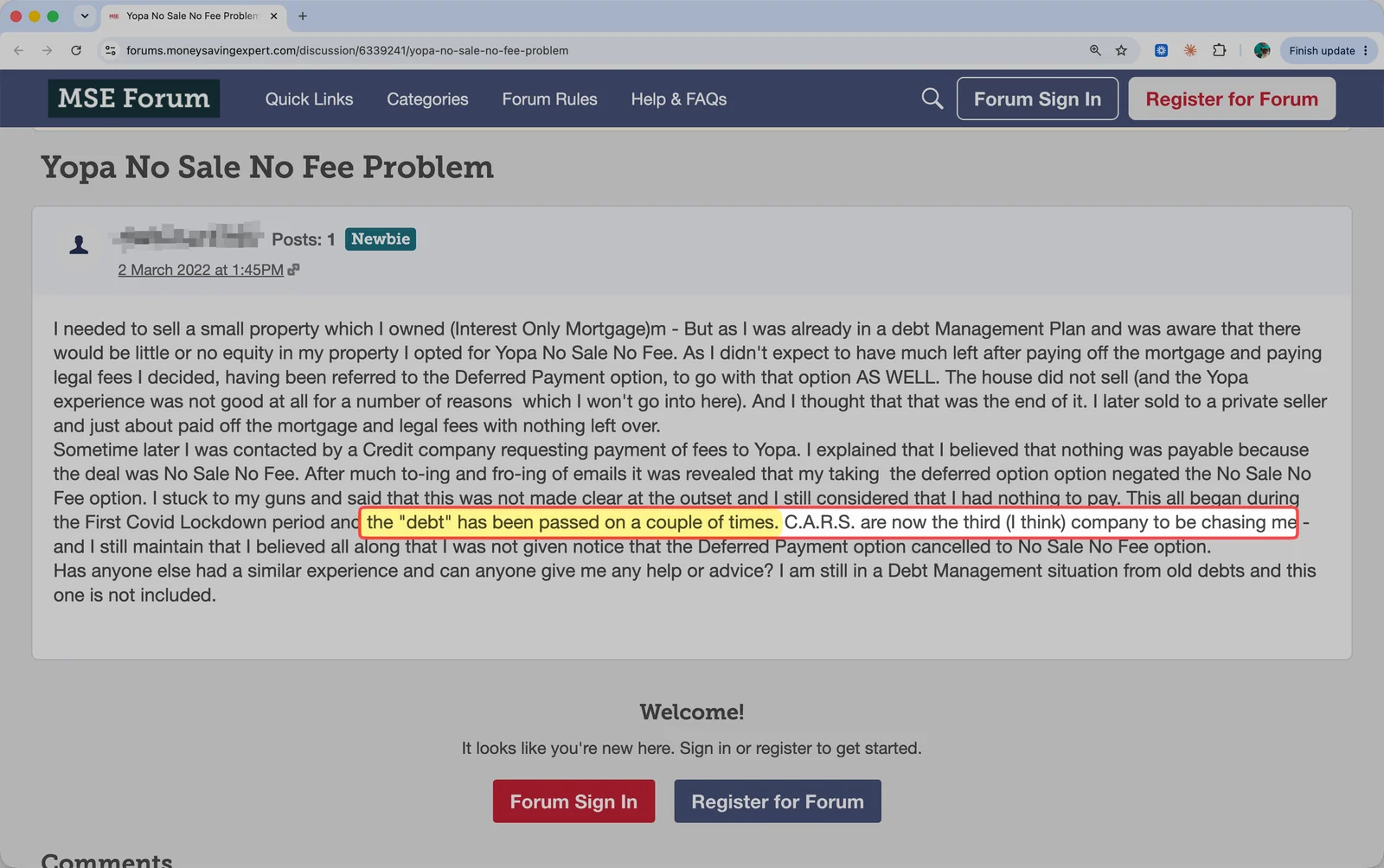
Another seller reports a bad experience, no sale, and then debt collectors chasing them for Yopa's fee.
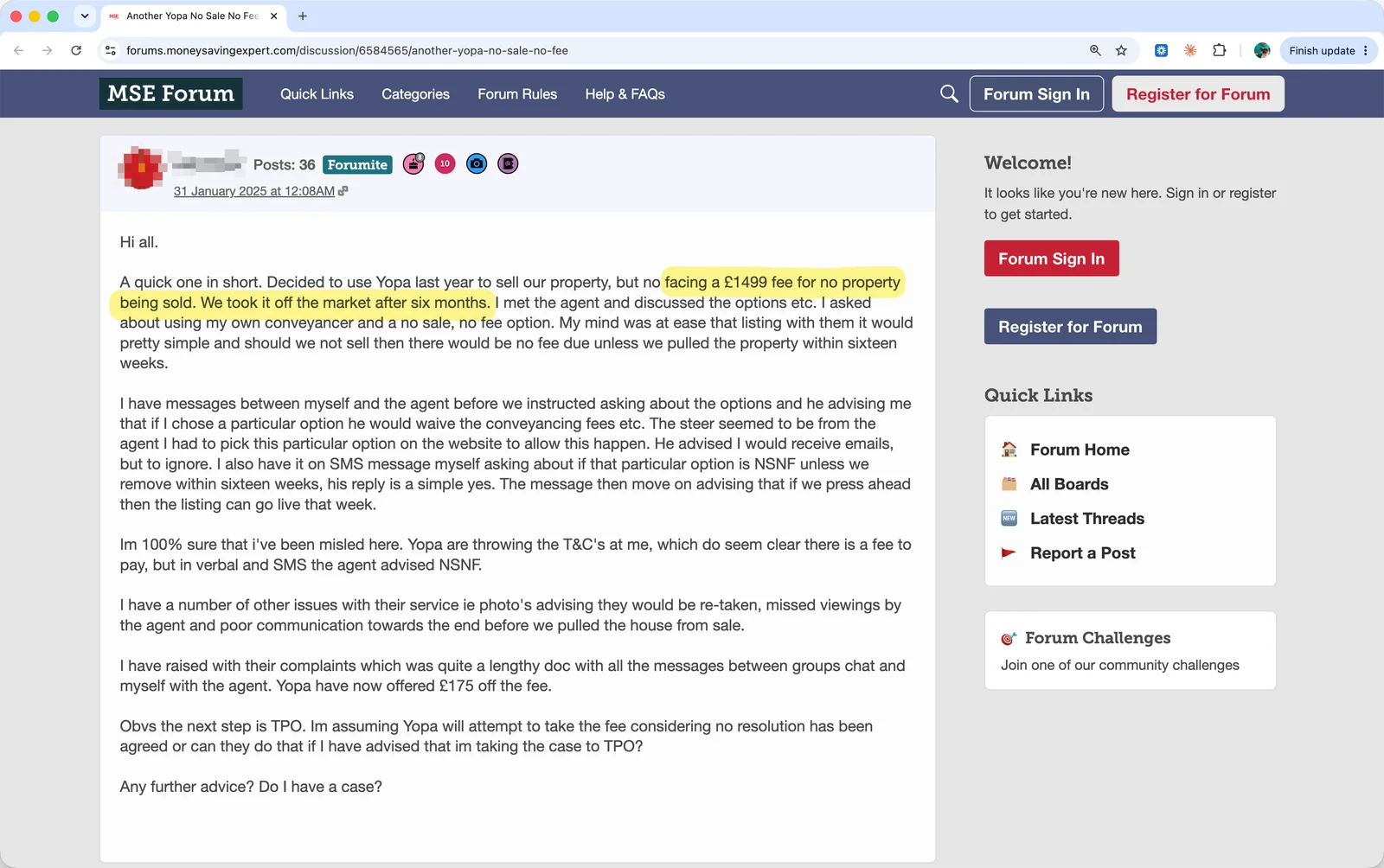
And here's their follow-up, posted while the complaint was still open:

The debt collectors are real too. This seller's home never sold, and the fee still ended up with a collection agency:

Top tip: Yopa's "Pay Later" option is a credit agreement, and leaving early is itself a payment trigger. If you withdraw, the full fee usually falls due that day. Read the payment terms line by line before you sign anything. (Or even better, just don't sign up with them). Read on to learn more.
I don't love conventional high-street estate agents either. But at least a no-sale-no-fee agent only gets paid when they get the job done. And if an agent does nothing, you can walk away without a bill. I've covered how that works in this article: when should you change estate agents?
Now, you might say it didn't work for those people, but it works on some sales. And yeah, it can. Which brings me to the next problem...
2. Nobody's actively selling your house
Yopa are genuinely low-cost. On average, they're about a third of the price of a typical estate agent. But how are they so much cheaper?
A big part of the answer: traditional agents employ a team of people to proactively drum up interest, sell properties and push sales through. Yopa's model just doesn't work that way. You're basically getting a call centre and a property listing.
Here's the proactive work a good local agent does that you'd be giving up:
- Calling their buyer database.
Ringing people they know are looking for a home like yours, to get you more viewings. - Cross-selling other viewers.
Following up with buyers who viewed similar homes nearby and inviting them to yours. - Hosting viewings.
On Yopa's core packages you usually do your own, and hosted viewings cost around £300 extra. Owner-led viewings often get worse results, because buyers struggle to picture the house as theirs while the owner shows them round. - Driving the sale through.
After an offer, someone has to chase solicitors and hold everything together. With Yopa, that's largely a web form and a call centre.
For me personally, I've been selling properties through local agents for 15 years, and for us 60 to 70% of our sales come from that proactive work good local agents do.
Remove all that, and you can end up with fewer viewings, a slower sale, and a sale that's more likely to fall through. (Nationally, around 1 in 3 sales fall through even with an agent pushing things along.)
So Yopa aren't the same service at a lower price. They're a different, passive product.
Yopa aren't another agent - just at a cheaper price. They're a different (and more passive) thing altogether.
Now, some people will say the seller just does a bit of extra work and saves thousands in fees. A decent trade-off, surely? Here's why I think that's one of the biggest mistakes you can make when selling a home...
3. Yopa's "cheap" fee isn't actually cheap
On the surface, the saving is real. It's right there in black and white: if the bill's about a grand, and the agent's fee was going to be three or four times that, you can see that difference.
But here's what you'll never see:
- The viewing that never happened.
- The bidding war that never started.
- The buyer who'd have paid more, but was never pushed.
There's never going to be perfect data on this either way. But having personally spent 15 years selling through agents on the front line, I think the saving you make in fees tends to be dwarfed by what you lose on the selling price.
That's why I've kept using local agents rather than online agents, even though I'd have saved hundreds of thousands of pounds in fees.
Another way to think about it:
Selling your home is one of the biggest financial transactions you'll ever make. Don't you want it in the hands of the people who'll do the best job? If costs are your big worry, I've broken down how to save thousands in estate agent fees in this video.
So what else have we got against Yopa? Well, remember how both my stories started. The Yopa rep gave a nice, high valuation...
4. Yopa's valuations can set your sale up to fail
After 500+ sales during my career, I think an accurate valuation at the start is arguably the most important part of a property sale.
Overprice your home and it doesn't make you more money. It just costs you time.
A couple of stats to back that up:
- Priced right, sold in 36 days.
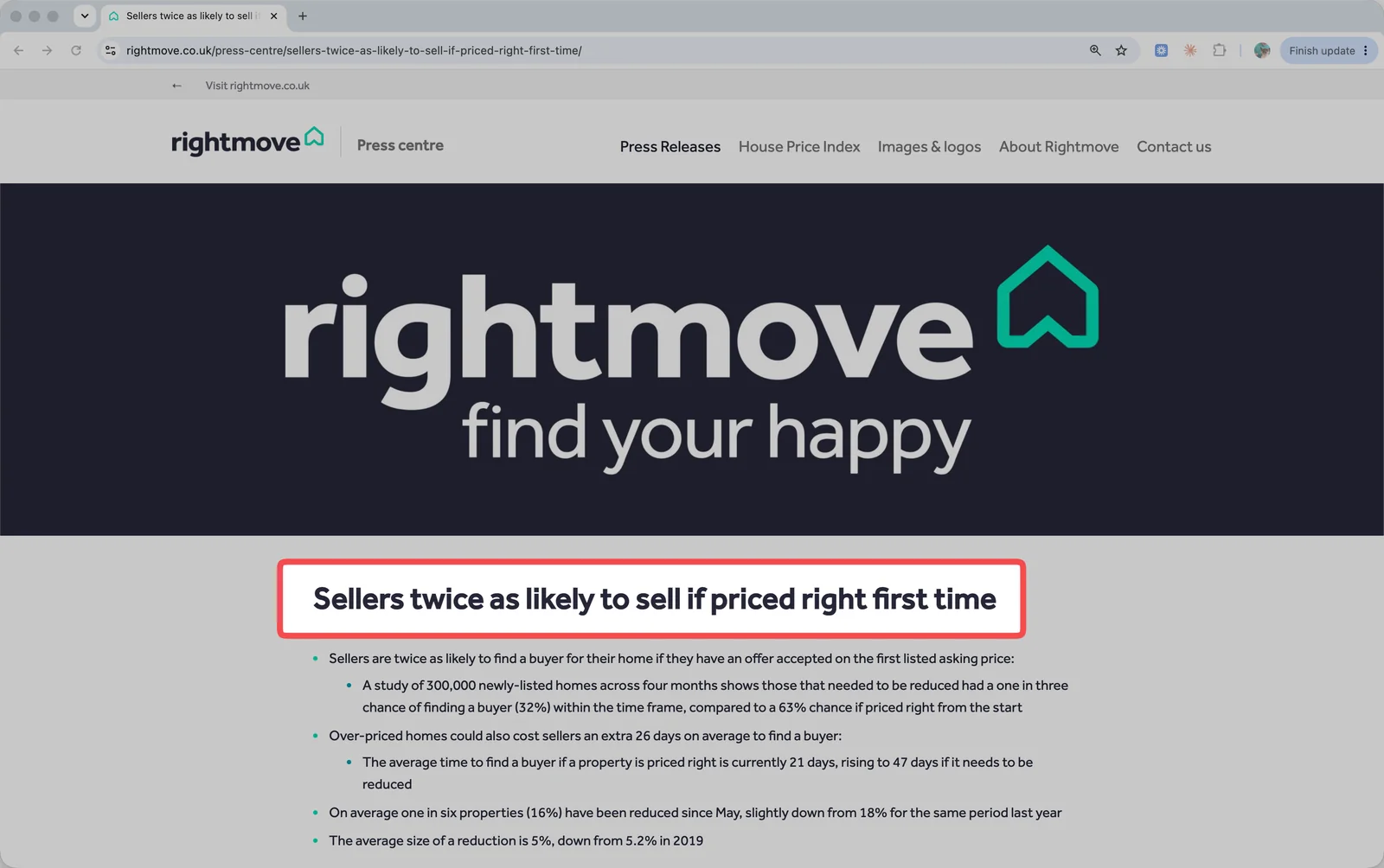
In July 2026, Rightmove reported that properties priced right first time find a buyer in 36 days on average. Homes needing one or more price cuts take three and a half times longer: 127 days. And around three quarters of the homes that sold this year needed no reduction at all. - Overpriced homes are half as likely to sell.
An earlier Rightmove study found sellers who price right first time are twice as likely to find a buyer at all.
Here's Yopa's problem. Their market share is spread thinly across the whole country, so they have a tiny share in any one area. Whereas a good local agent has maybe just sold one on your road, and another two streets over last month, and tons of others nearby. Yopa's agent usually hasn't, so they simply don't have the same context to price your home accurately.
And remember, they charge up front too.
I can't accuse anyone of deliberately misleading sellers...
But "hypothetically", the easiest way for Yopa to get paid would be:
- Promise the earth in the valuation, and be really confident,
- Get the sign-up,
- Get the up-front cash.
Funnily enough, that happens to be the exact sequence in both of the stories I told you earlier, and in reports on forums elsewhere too...
To be clear, Yopa aren't the only ones at fault when it comes to valuations.
High-street agents overvalue to win business as well, and it frustrates me about them just as much. But at least they still have to sell the place to get their money! Yopa got paid already!
So we've got questionable valuations, a service that strips away the proactive work that drives results, and fees they keep either way.
Surely the reviews would expose all this?
Yeah. About those...
5. Yopa's reviews don't tell the full story
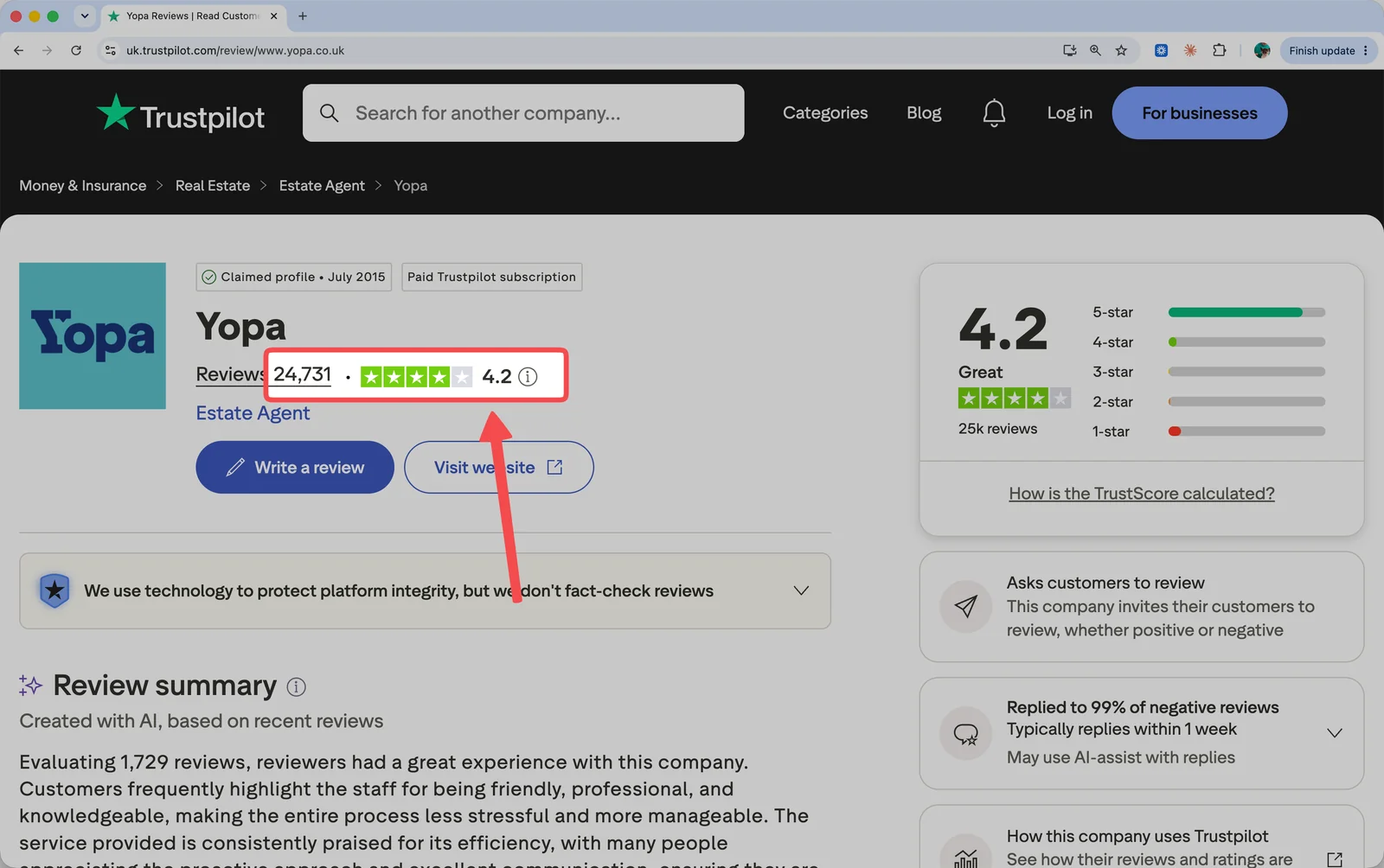
Check Yopa on Trustpilot and you'll see 4.2 out of 5, from around 24,000 reviews. Not amazing, but not awful.
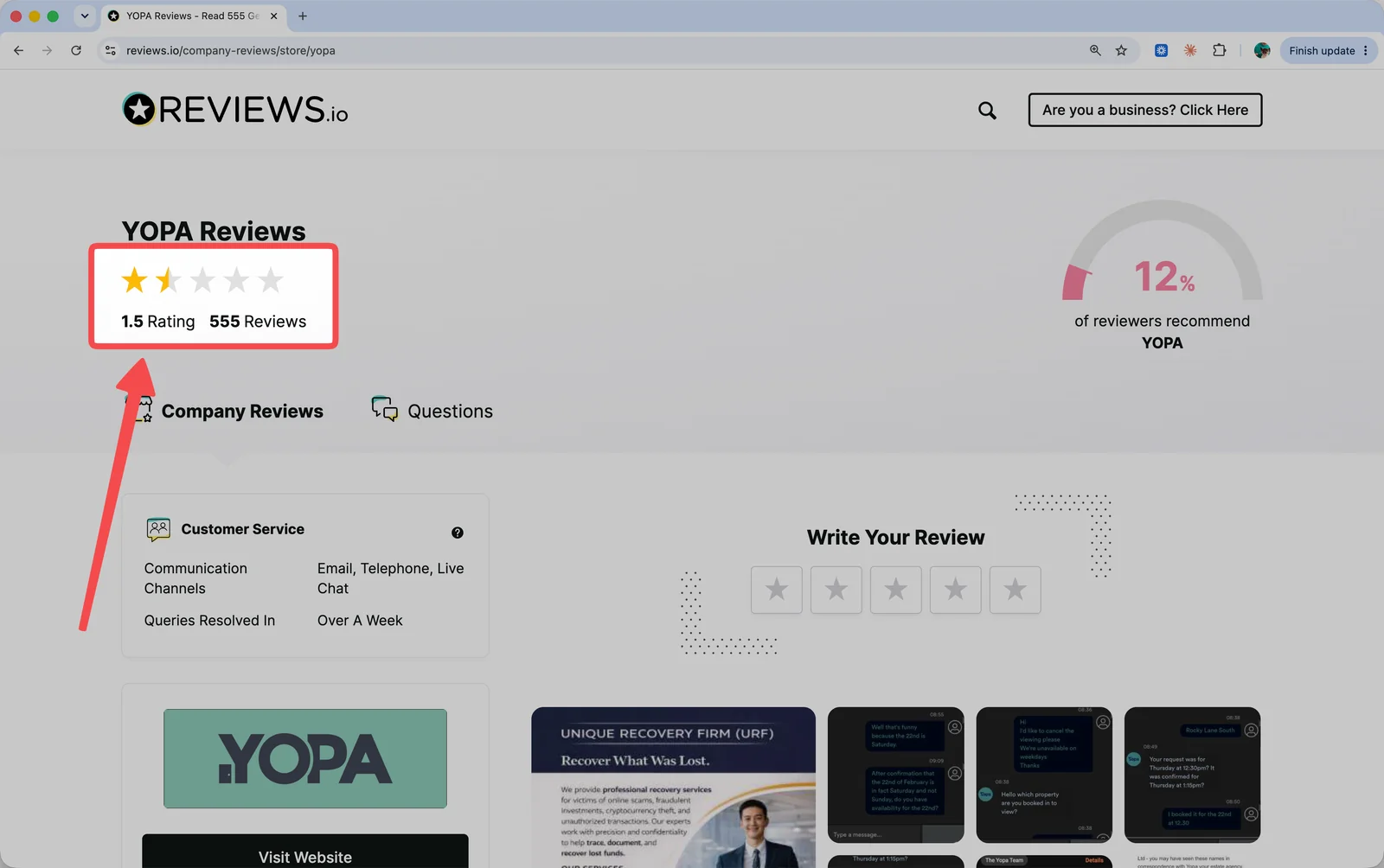
Then check Reviews.io: 1.5 out of 5, from over 500 reviews. Same company. So what's going on?
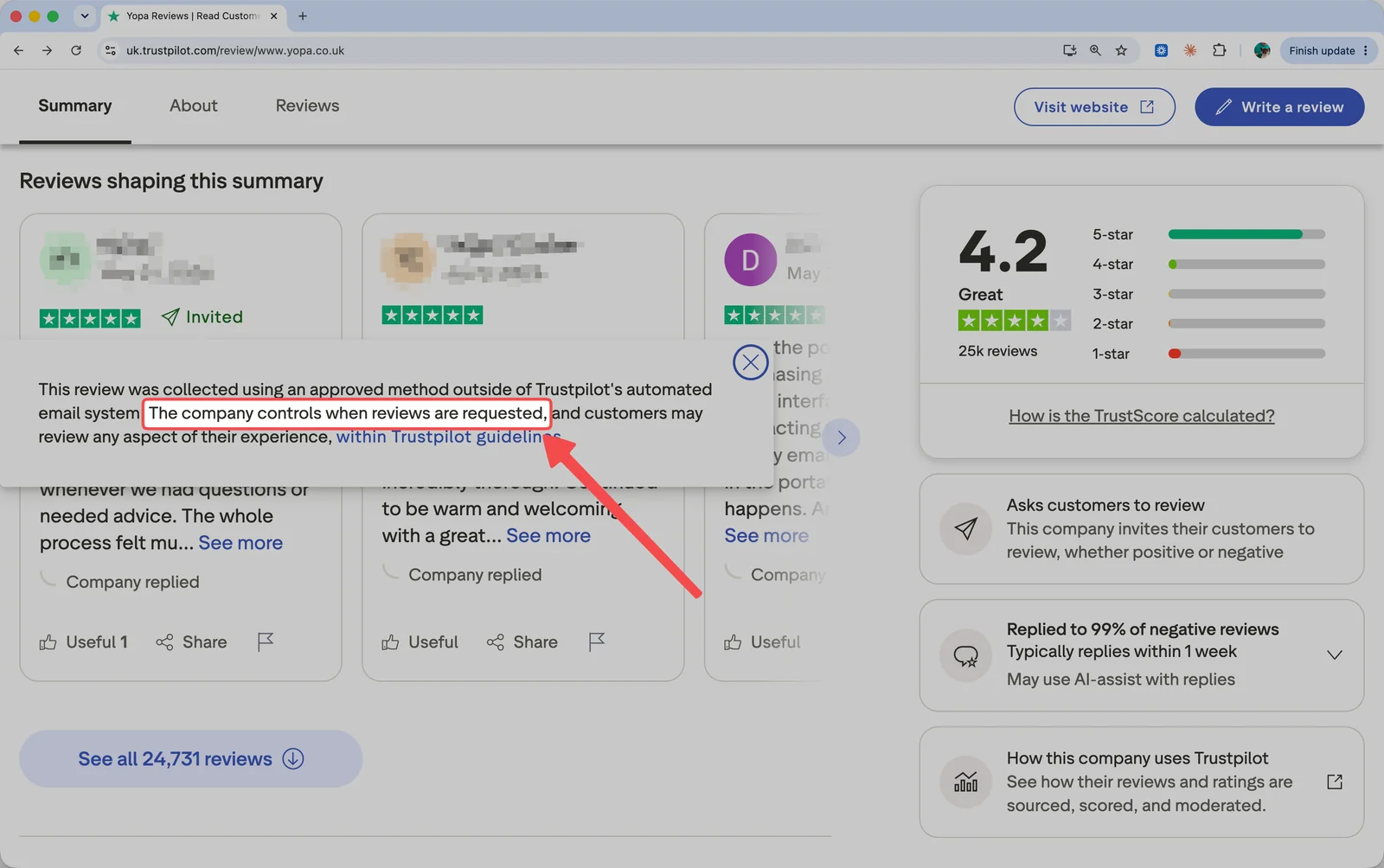
Back on Trustpilot, the first clue is in black and white: Yopa asks for reviews via automatic invitations, meaning they control when reviews are requested (and who from).
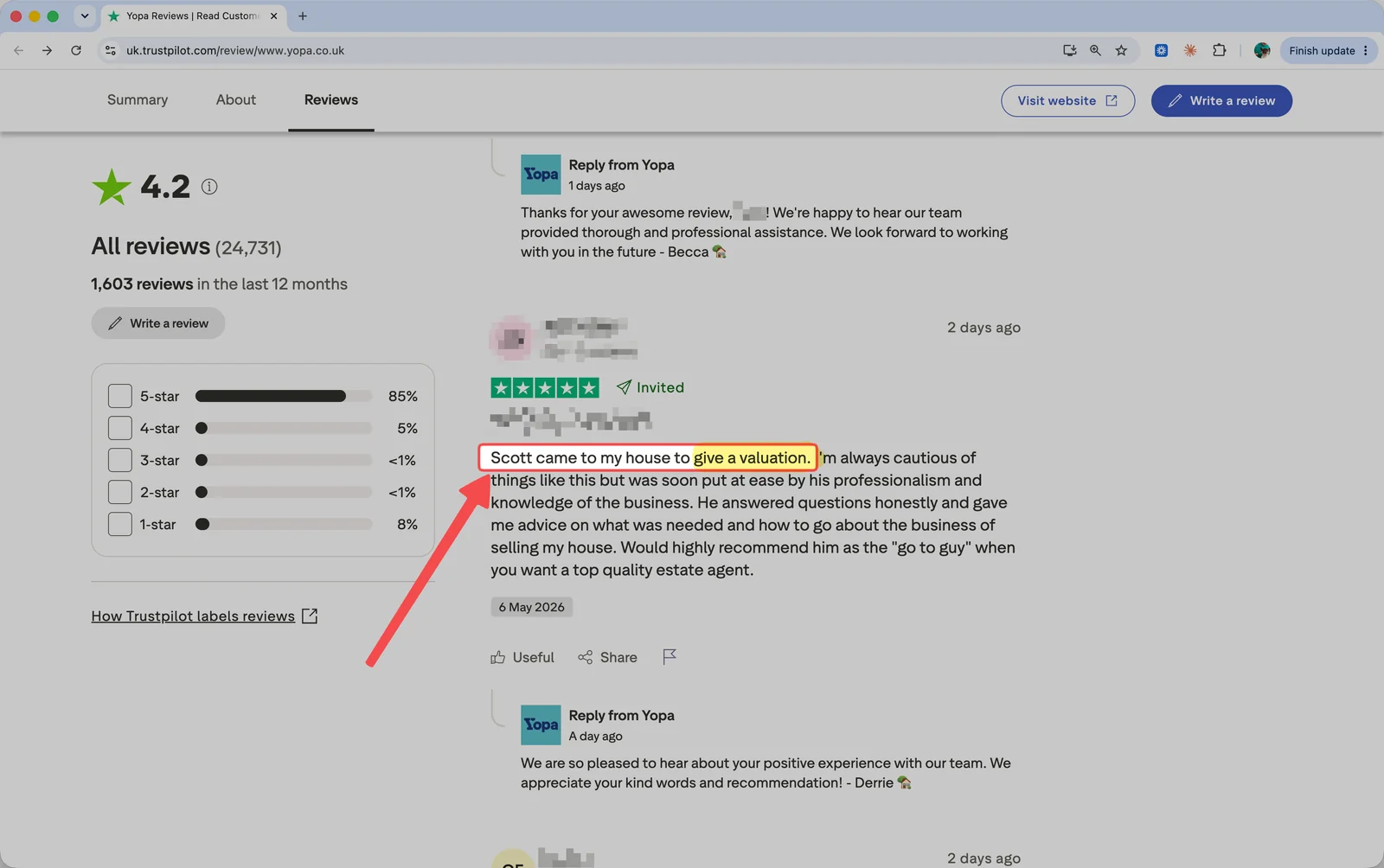
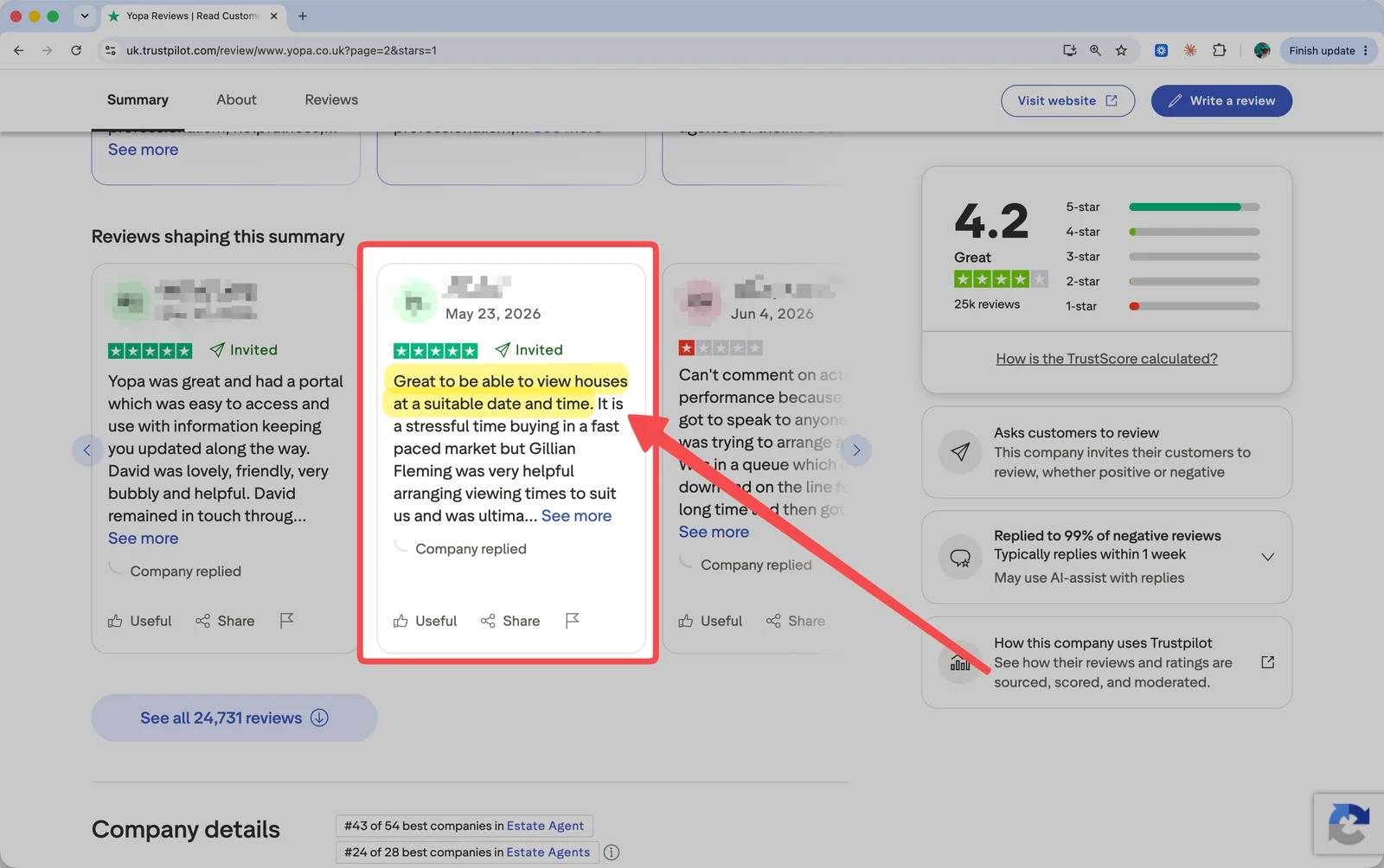
Not totally unusual. But read the five-star reviews and you'll notice loads are about the initial chat with a salesperson, or the valuation visit. Plenty more come from buyers as well, who never paid Yopa a penny.
Here's what those five-star reviews often describe. Not a sale. A valuation visit:
And this one's from a buyer arranging viewings, not a paying seller:
The actual paying sellers are in there too. Some are positive. But there are nearly 2,000 one-star reviews in total. You've just got to dig through the confetti to find them.
In my opinion, that looks like a company working overtime to manicure its online reputation... and actively drown out what many of its real customers have to say. And even then, only managing a 4.2 rating.
Some of this sounds crazy, so here are the plain facts behind it:
- Twelve years in, no profit.
Yopa's accounts at Companies House have never yet shown a profit, and over £100 million of investor money has gone into the business. - Director exits.
Five of their six directors left in the space of about two years. - A model they keep reinventing.
Upfront fees, pay later, no-sale-no-fee at roughly double the price, local agents, self-employed agents. They keep switching because, in my view, they're struggling to make any of it work. - Six advertising complaints.
Yopa have been reported to the advertising watchdog at least six times over how they advertised their service and fees. Every time, the ad was changed or pulled. - Sellers paying for nothing.
Sellers paying thousands with no result, and some then chased by debt collectors for homes that never sold. - Charges for using your own solicitor.
They push their recommended conveyancer, and sellers report being quoted around £250 extra just to use their own solicitor.
The market has noticed too. Industry data from TwentyCi puts online agents at only around a 5% share of all sales (and falling).
My Verdict
We're 15 years into the "cheap online agent" experiment now, and I'm struggling to see any signs it's working.
If you want my opinion: I'm sure there are good people at Yopa who care about doing a good job...
But on the whole, this doesn't feel like a business built to get you the best possible result as a home seller. To me it feels like smoke and mirrors, again and again. It seems like they prey on the dissatisfaction people largely feel with conventional high-street estate agents. But instead of coming up with a better solution (which would be hard), at some point they made the decision to shift towards just extracting money from people (which is easier for them).
Based on having sold properties on the open market for 15+ years, and dealing with 1,000+ conventional estate agents (who tend to be very annoying), I still literally can't find a single redeeming quality with Yopa.
Even the so-called best bit (the low fee) ends up costing most sellers more in the long run - by not doing a proper job of actually selling the property.
So if I'd never use Yopa on my own sale, what would I do instead?
What I'd use instead of Yopa
This isn't really just about Yopa. In my view it applies to the whole low-cost online estate agent model.
To be clear, I'm not a particularly big fan of high-street agents either. The majority of them are poor, and I've written a whole guide on why so many people dislike estate agents.
But having dealt with over 1,000 estate agents across 15 years, here's what I keep seeing: a good, proactive, no-sale-no-fee local agent is still the best way to sell for most people. Their fee usually works out making you more in the long-run. Here's the comparison in one place:
If you do go the local agent route, choosing the right one matters enormously. I've shared part of a larger workshop I recorded. This 9-minute part covers our 3-step process on how to choose the best estate agent.
If you're at a crossroads right now, in the middle of choosing how to sell, I hope this has been useful.
Every property and every seller is different. So I've designed a free, 60-second quiz that helps you find the best way to sell, given your property and your priorities. You'll get your results straight away.
Thanks for reading, and hit the button below to get started:
Common questions about Yopa
Before you go, here are the questions I get asked most about Yopa:
Is Yopa cheaper than a high-street estate agent?

Yopa's headline fee is lower, from £999 against a typical commission of 1 to 1.5%. But you usually pay it whether your home sells or not, and hosted viewings cost around £300 extra. And because nobody's proactively chasing buyers for you, you tend to get fewer viewings and less competition, which can cost you more on the final sale price than the fee saves.
Do you have to pay Yopa if your house doesn't sell?
On Yopa's cheapest packages the fee is payable regardless of the result. Pay Now is non-refundable once you're listed, and Pay Later falls due either when you sell, ten months after listing, or when you withdraw (whichever comes first). Their genuine no-sale-no-fee option costs roughly double when the house does eventually sell, and the price isn't published.
Does Yopa do viewings for you?
Hosted viewings aren't included in Yopa's core packages. Most sellers show buyers around themselves, or pay around £300 extra for accompanied viewings. Across the hundreds of sales I've been involved in, I've found owner-led viewings often produce worse results, because buyers find it harder to imagine the property as their own home.
Can you trust Yopa's Trustpilot reviews?
Yopa's Trustpilot score of around 4.2 is built partly on invited reviews, and many five-star ratings describe the valuation visit or come from buyers rather than paying sellers. On Reviews.io, where reviews are unsolicited, Yopa scores around 1.5 out of 5. Look for reviews from sellers who actually completed before you judge.
What happens if you leave Yopa before your home sells?
Leaving Yopa early usually triggers the fee. On Pay Later, withdrawal is a payment trigger, so the full amount falls due the day you quit. Some sellers end up paying Yopa for nothing, then paying a full estate agent fee on top to actually get sold. Read the contract terms carefully before you sign or leave (or avoid signing up in the first place).
Are online estate agents like Yopa ever a good idea?
Online estate agents can suit confident sellers in busy markets who price keenly, enjoy doing their own viewings and value the fee saving above everything else. For most sellers though, a good no-sale-no-fee local agent gets more viewings, a stronger price and more certainty, and usually leaves you better off overall.
By Matthew Cooper, Co-Founder of Home Selling Expert

I'm an experienced property insider, trusted media commentator, and the Founder of Home Selling Expert and YesHomebuyers.com. I've bought and sold almost 150 properties worth nearly £17m, and my advice articles (like this one!) have been viewed more than 1million times.
Auction Valuation & Consultation
- Free referral to my #1 Leading Auction House in your area
(Take the time & guesswork out of shopping around) - Get all your auction questions answered for free...
(...by experienced auction experts I know and trust) - Free, no-obligation auction valuation within 48 hours
(Find out what your property may be worth at auction)

Sell Your Home By Auction?
- Don't settle for a slow and frustrating sale...
- Just 2 minutes to determine if auction's right for you...
- And receive my free, personalised guidance on your sale.
(Including free introductions to leading auction houses I know and trust)

Sell Your House By Auction?

Chain-Free Property Sale?
- Explore proven chain-free alternatives...
- Avoid property chain stress and uncertainty...
- Get free, personalised advice for a smoother sale.
to a House Buying Company?
- A free, no-obligation cash offer within 24 hours...
- ... and buy your house in as little as 7 days.
- But are they right for you? Find out in the next 2 minutes.
to a House Buying Company?
- A free, no-obligation cash offer within 24 hours...
- ... and buy your house in as little as 7 days.
- But are they right for you? Find out in the next 2 minutes.
Just good advice. Click below to chat with me:
Broken House Chain?
- A free, no-obligation cash offer within 24 hours...
- ... and buy your house in as little as 7 days.
- But are they right for you? Find out in the next 2 minutes.
Get Back on Track Quickly
- Explore fast and reliable alternative selling methods...
(which are tailored to your situation) - Receive free expert guidance on navigating your sale
(overcome the challenges of a broken property chain) - Free introductions to local property experts I know & trust
(for a hassle-free sale next time around)
Fast Selling Solutions for Free...
- Discover fast and reliable alternative selling methods.
(Explore your options with no cost or commitment) - Receive a free action plan tailored to you...
(...based on your priorities, property and timeframes) - BONUS: Learn to avoid common mistakes + save £1,000s...
(By using our FREE "Inherited Property Pitfalls" download)
Fast Selling Solutions For Free
right for you?
- A free, no-obligation valuation within 48 hours...
- ... and sell your house in as little as 6 weeks.
- But are they right for you? Find out in the next 2 minutes.
right for you?
- A free, no-obligation valuation within 48 hours...
- ... and sell your house in as little as 6 weeks.
- But are they right for you? Find out in the next 2 minutes.
Sell Your Home
- Explore fast and reliable alternative selling methods...
(which are tailored to your situation) - Discover the ideal way for you to sell...
(Based on your property & priorities) - Free introductions to local property experts I know & trust
(for a hassle-free sale)
Sell Your Home?
- Discover fast and reliable alternative selling methods.
(Explore your options with no cost or commitment) - Receive a free action plan tailored to you...
(...based on your priorities, property and timeframes) - Get free introductions to handpicked, trusted companies.
(Avoid stress & save time with our recommendations)
See if Auction is right for you...
- Avoid the biggest mistakes subsidence sellers make...
- Don't settle for a slow and frustrating sale...
- Find out how to maximise your sale price, and minimise headaches.
See if Auction is right for you...


.svg)


